

Core Conveying Technology
How Industrial Pneumatic Conveyors Power Bulk Material Handling
Industrial pneumatic conveyors are designed to move bulk materials efficiently, safely, and with minimal material degradation across a wide range of processing environments. By using controlled airflow and pressure, these systems transport powders, pellets, and granular materials through enclosed pipelines—reducing dust emissions, improving cleanliness, and supporting consistent material flow.
From dilute phase to dense phase conveying, the selection of the right conveyor system directly impacts energy efficiency, system reliability, and long-term operational performance. Each method offers distinct advantages depending on material characteristics, transfer distance, and process requirements.
Cyclonaire engineers pneumatic conveying systems around your specific application—ensuring proper system design, optimized airflow, and seamless integration with feeding, filtration, and control systems. The result is a reliable, efficient conveying solution built to perform across demanding industrial operations.
Understanding the different types of pneumatic conveyors is key to selecting the right system for your application.
Types of Pneumatic Conveyors for Bulk Material Handling
Pneumatic conveying systems are categorized by how materials move through the pipeline. From high-velocity dilute phase to controlled dense phase systems, each method is designed to meet specific material and process requirements—ensuring efficient transport, reduced wear, and long-term reliability.
Dilute & Semi-Dense Phase Conveyors
Dilute and semi-dense phase conveying systems use controlled airflow to transport materials at moderate to higher velocities. These systems are ideal for applications requiring continuous transfer and flexible system layouts while maintaining reliable material flow.
Featured Products:
Dense Phase Pressure Conveyors
Dense phase pressure systems move materials at low velocities using controlled air pressure, significantly reducing pipeline wear and material degradation. These systems are well-suited for abrasive, fragile, or high-value materials requiring careful handling.
Featured Products:
Dense Phase Vacuum Conveyors
Dense phase vacuum systems combine vacuum loading with pressure conveying to enable efficient, enclosed material transfer. This method minimizes dust generation while maintaining controlled, reliable material movement.
Featured Products:
Blending & Conveying Systems
Blending and conveying systems combine material mixing and transport into a single integrated solution. These systems improve efficiency, reduce equipment requirements, and maintain consistent material quality throughout the conveying process.
Featured Products:
Selecting the Right Conveyor System
The optimal conveying solution depends on material characteristics, system layout, and performance requirements. Cyclonaire engineers each system to ensure proper airflow, material behavior, and long-term operational efficiency.
Performance Features of Industrial Pneumatic Conveyors
Cyclonaire pneumatic conveyors are engineered to deliver consistent material flow, system reliability, and long-term performance across a wide range of industrial applications. Each system is designed with flexibility in mind—offering standard configurations, optional enhancements, and fully customized solutions to meet specific process requirements.
Standard
- Engineered for consistent material flow and conveying performance
- Designed for integration with complete pneumatic conveying systems
- Built for continuous operation in industrial environments
- Compatible with a wide range of bulk materials
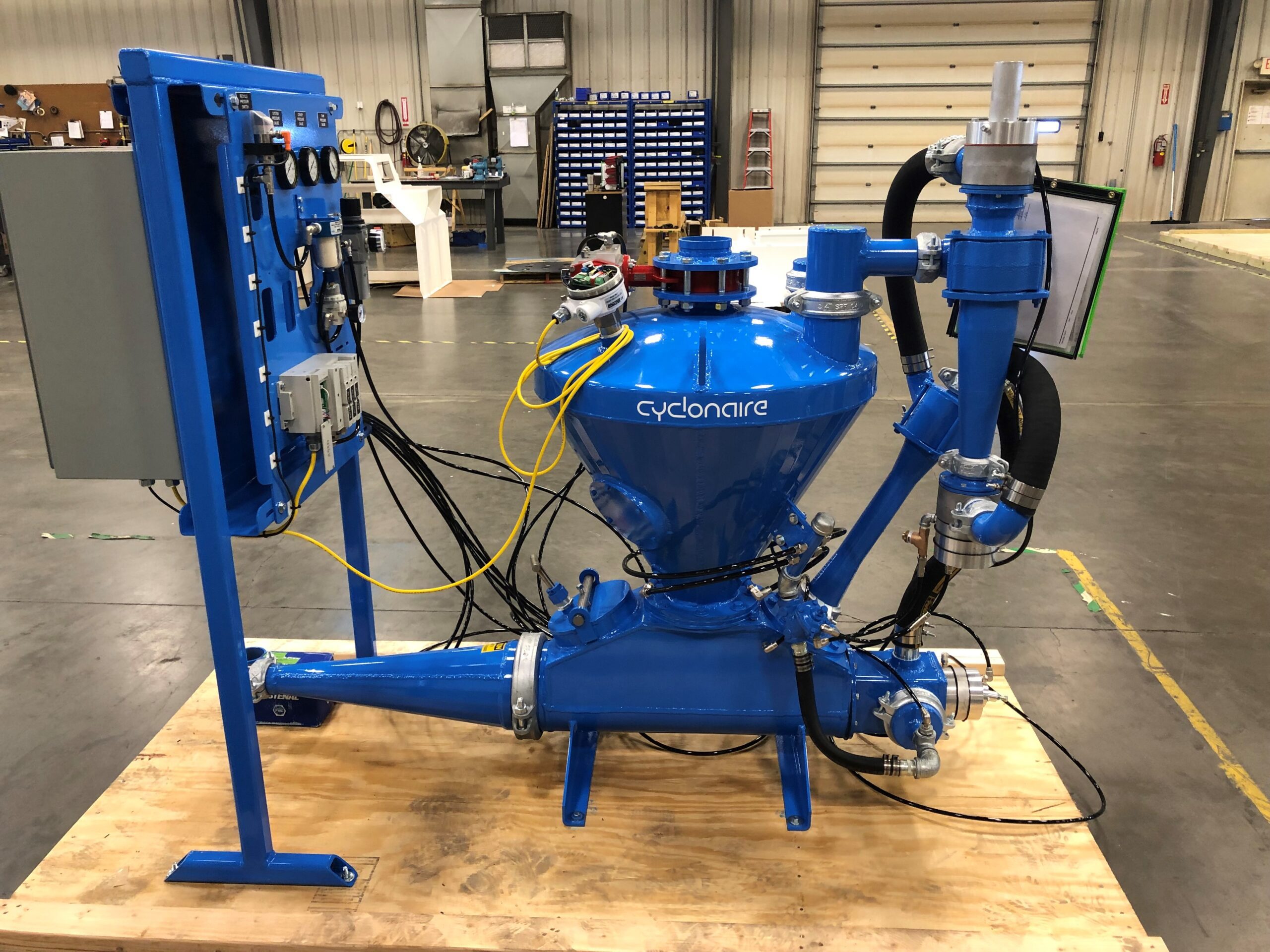
Standard Options
- Variable Airflow and pressure control for optimized performance
- System configurations for different conveying methods (dilute, dense, semi-dense)
- Noise reduction and enclosure options
- Advanced monitoring and control integration
Custom Options
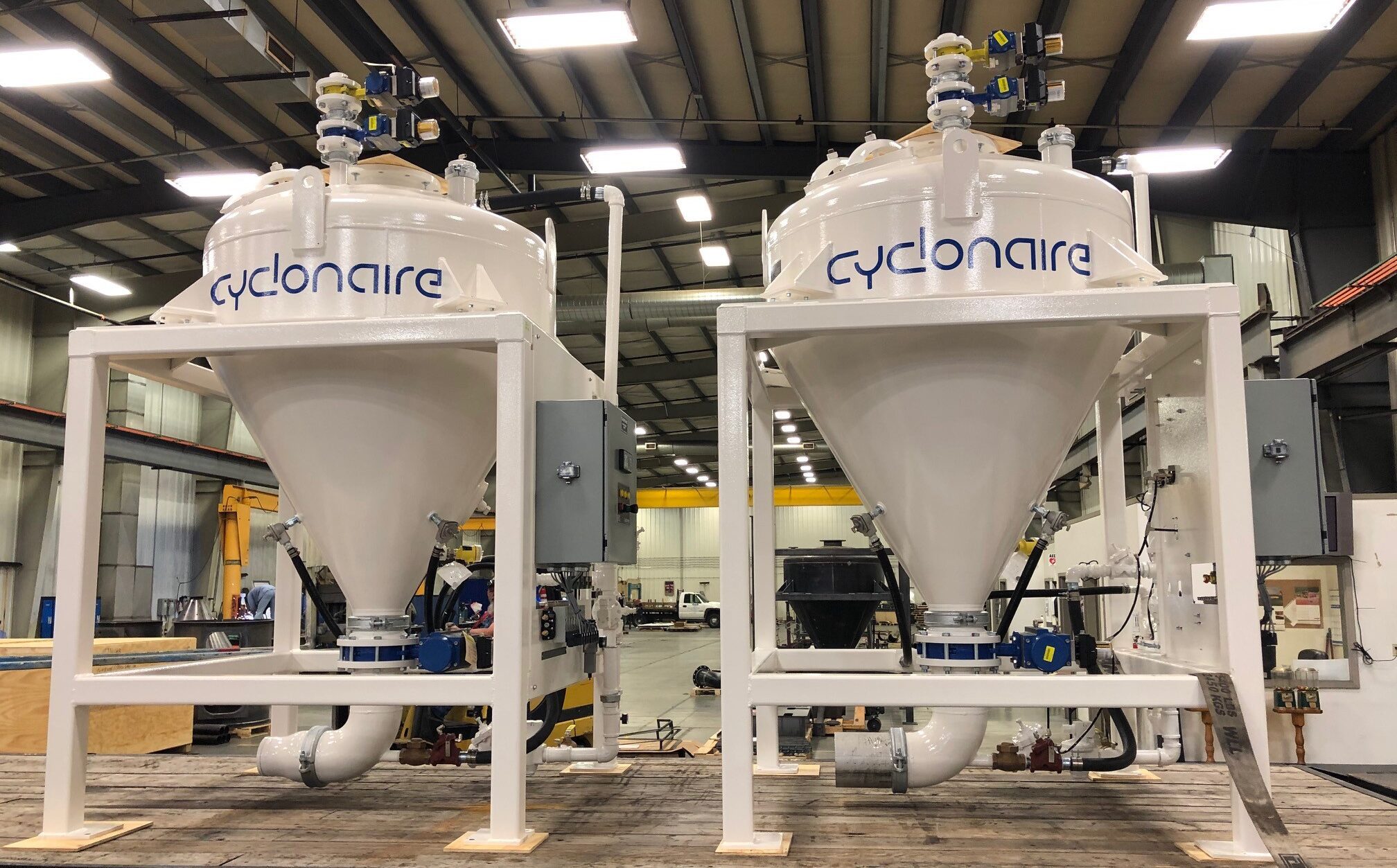
- Application-specific system design based on material behavior
- Engineered layouts for complex plant configurations
- Integration with upstream and downstream equipment
- Solutions for abrasive or fragile materials
Cyclonaire Total Solutions
Engineered Right. Integrated Fully. Supported for Life.
Every Cyclonaire system begins with the right solution—engineered specifically around your material, process, and operational goals. Rather than applying a one-size-fits-all approach, each conveying system is designed to align with the unique requirements of your application, ensuring optimal performance from day one.
That solution is part of a total system. Cyclonaire integrates conveying equipment with feeding, filtration, and control technologies to create a fully aligned material handling process. This system-level approach ensures consistent material flow, reduced downtime, and efficient operation across your entire facility.
Support doesn’t stop at installation. Cyclonaire partners with customers for the lifetime of their systems—providing ongoing service, optimization, and engineering support to ensure performance continues to evolve with operational demands. The result is a conveying solution built not just to perform—but to endure.
Why Conveyor Selection Matters in Pneumatic Conveying
Selecting the right pneumatic conveyor is critical to achieving efficient, reliable system performance. Cyclonaire conveyor solutions deliver:
Reduced wear
Optimized conveying methods and controlled material velocities minimize abrasion within pipelines and system components, extending equipment life and reducing maintenance requirements.
improved efficiency
Engineered conveying systems ensure consistent material flow while reducing energy consumption, helping operations achieve higher throughput with lower operational costs.
operational flexibility
Adaptable to a wide range of materials and conveying requirements, pneumatic conveyor systems support everything from precise material transfer to high-capacity industrial applications.
Cyclonaire ensures each conveyor system is properly matched to the application—delivering long-term performance and reliability.
Integrated Pneumatic Conveyors Within Complete Material Handling Systems
Pneumatic conveyors are a critical component of a fully integrated material handling system—not standalone equipment.
This system-level approach ensures that material flow, equipment performance, and process control are fully aligned—resulting in a more efficient and reliable operation. Cyclonaire ensures seamless integration across every stage of the conveying process:
Feeding Devices
Ensure precise, controlled material introduction into conveying systems.
Conveying Lines & Pipelines
Engineered systems designed for efficient, enclosed material transport.
Filtration & Separation Systems
Maintain clean airflow, reduce dust, and protect system performance.
Automation & Control Systems
Advanced controls for optimized system performance and real-time monitoring.
Optimize Your Pneumatic Conveying System
Cyclonaire works with your team to design and integrate conveyor systems tailored to your application.
F.A.Q.
Frequently Asked Questions
Cyclonaire designs pneumatic conveyor systems for a wide range of industries, including battery manufacturing, cement, mining & minerals, rail sanding, and tire and rubber manufacturing. Each system is engineered to handle specific material characteristics and process requirements for reliable, efficient material transfer.
Pneumatic conveying systems typically include dilute phase, dense phase pressure, and dense phase vacuum conveyors. Each method is selected based on material properties, transfer distance, and system requirements to ensure optimal performance to ensure optimal performance and minimal material degradation.
Cyclonaire delivers fully engineered conveyor systems designed around your material, process, and performance goals. Beyond system delivery, the team provides ongoing support and optimization—ensuring long-term reliability, adaptability, and consistent system performance.
Pneumatic conveyors are a core component of a complete material handling system. Cyclonaire integrates conveying systems with feeding, filtration, and control technologies to ensure consistent material flow, reduced dust emissions, and efficient operation across the entire process.